Most people pick up a carton of eggs, glance at the date, and assume it is simply an expiration date telling them when the eggs are “bad.” However, according to grocery workers and food labeling rules, that date often represents something different — and many shoppers have never been taught what it actually means.
Understanding this label can help you buy fresher eggs, reduce food waste, and avoid throwing away perfectly good food.

4
What the date usually represents
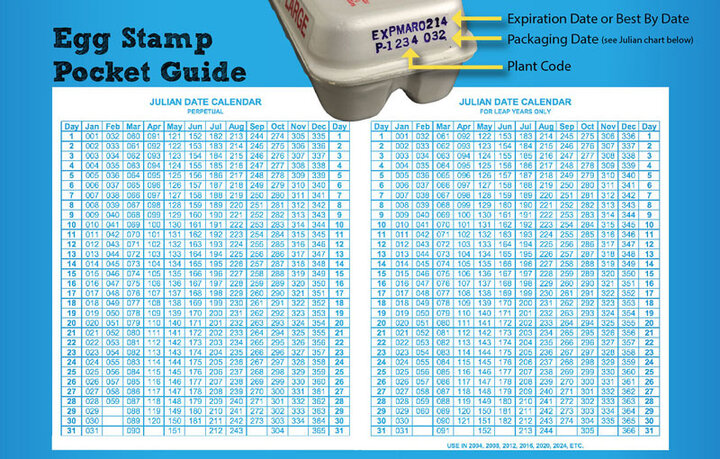
On many egg cartons in the United States, the printed number is not an expiration date — it is a packing date.
This is often written as a three-digit number known as a Julian date, which corresponds to the day of the year the eggs were washed, graded, and placed in the carton.
For example:
- 001 = January 1
- 032 = February 1
- 100 = April 10
- 365 = December 31
Most shoppers assume this number means the eggs are old, when in reality it tells you how fresh they are at the time of packaging.
Why this matters
Because eggs are refrigerated, they can remain safe to eat well beyond the packing date if stored properly.
In general:
- Eggs are usually good for 3–5 weeks after the packing date when kept cold in the refrigerator.
- They often stay safe even after a “sell by” or “best by” date printed on the carton.
Many people throw eggs away too early simply because they misinterpret the label.
Sell-by vs. Best-by vs. Packing date
Different cartons may show different dates:
- Packing date — when the eggs were placed in the carton.
- Sell-by date — tells the store how long to display them for sale.
- Best-by date — suggests when quality may start to decline, not when they are unsafe.
None of these necessarily mean the eggs are spoiled on that exact day.
How to tell if eggs are still good
Instead of relying only on the date, you can check freshness in simple ways:
1. The water test
Place an egg in a bowl of water:
- If it sinks — it is fresh.
- If it stands upright — it is older but usually still usable.
- If it floats — it is likely spoiled.
2. Smell test
Crack the egg into a bowl. If it smells strongly bad, discard it. Fresh eggs have little to no odor.
3. Visual check
Look for unusual colors, slime, or cloudiness in the yolk or white.
Why most shoppers miss this detail
Many people are never taught how egg labeling works. Grocery workers often notice that customers:
- Grab eggs randomly
- Rarely check the packing date
- Assume the printed number is always an expiration date
As a result, perfectly good eggs are frequently thrown away.
What to look for next time you buy eggs
When choosing a carton, check the packing date and pick the highest number (closest to today’s date). This means you are buying the freshest eggs available.
Final takeaway
The date on your egg carton is usually not a simple expiration date — it is often a packing date that tells you how fresh the eggs were when boxed. Understanding this small detail can save money, reduce waste, and help you make better grocery choices.
Once you know this, you may never look at egg cartons the same way again.