It always starts the same way: a few red marks on the skin that don’t seem like a big deal. Maybe you assume it’s a mild rash, an allergy, or even irritation from clothing.
But when the marks keep coming back… spreading… and the itching won’t stop — that’s when the worry sets in.
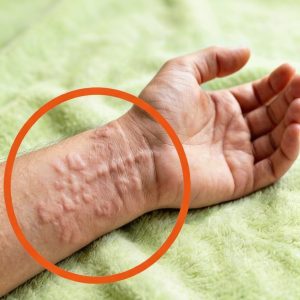
And in this case, the photo shows multiple red, ring-shaped patches on the back of a child’s neck, which have reportedly lasted 2 months and are getting worse.
So what could it be?
What It Looks Like in the Photo
The rash appears as:
- Red circular or “ring-like” patches
- Some rings look partially faded in the center
- Multiple areas are clustered around the neck
- The edges look more noticeable than the middle
That “ring” pattern is an important clue, because certain skin conditions commonly create this shape.
Most Likely Cause: Ringworm (Tinea Corporis)
Even though the name sounds scary, ringworm is not a worm.
It’s a fungal skin infection, and it often looks exactly like this:
✅ red rings
✅ slightly raised borders
✅ clearing in the center
✅ can itch and spread over time
Ringworm can stay around for weeks or even months if it’s not treated correctly — and it often spreads gradually, especially in kids.
How kids can catch it:
Ringworm spreads through:
- Direct skin contact with someone infected
- Shared items like hats, towels, pillows, hairbrushes
- Pets (especially cats and dogs)
- Wrestling/close sports contact
- Humid environments + sweating
Because it’s on the neck area, it can also be triggered or spread by collar rubbing, sweat, or sharing clothing.
Why It Might Be Getting Worse
This is the part many parents don’t realize:
❌ If you treat fungal rashes with steroid cream…
It can get worse fast.
Some people try hydrocortisone or steroid creams thinking it’s eczema, but steroids can hide the rash while the fungus spreads deeper and wider.
That’s why some cases look like they “won’t go away” for months.
Other Possibilities (That Can Look Similar)
Not every ring rash is ringworm. Other causes include:
1) Nummular eczema
Round itchy patches, but usually less “ring-like” and more dry/scaly.
2) Contact dermatitis
Could be irritation from shampoo, detergent, clothing fabric, or jewelry.
3) Pityriasis rosea
A viral-type rash that can form oval patches and spread, often lasting weeks.
4) Granuloma annulare
A harmless condition that forms smooth rings — often not itchy — and can last a long time.
5) Lyme-related rash (less likely here)
Usually a single expanding bullseye rash with fever or fatigue—this photo looks more like multiple smaller rings.
What Parents Should Do Next (Safe Steps)
If this has been going on 2 months and spreading, it’s time to treat it seriously.
✅ Step 1: See a doctor or dermatologist
A clinician can confirm it quickly by:
- Examining it closely
- Doing a simple skin scraping test
- Using a Wood’s lamp (sometimes helpful)
✅ Step 2: If ringworm is suspected, start antifungal treatment
Most mild cases respond to:
- OTC antifungal cream (like terbinafine or clotrimazole)
Applied properly:
- 1–2 times daily
- Continue at least 1–2 weeks after it looks better
✅ Step 3: Prevent it from spreading at home
- Wash towels/clothes/bedding in hot water
- Don’t share hats, brushes, pillows
- Check pets for bald patches or itching
- Keep the area clean and dry
When It’s Urgent
Get medical care ASAP if you notice:
🚩 fever
🚩 rash spreading rapidly
🚩 pain, swelling, warmth, pus
🚩 scalp involvement (may need oral medication)
🚩 rash near eyes
🚩 your child is immunocompromised