Few Hollywood careers are as instantly recognizable—and as intentionally brief—as that of Phoebe Cates. Rising to fame in the early 1980s, Cates became a defining face of a generation, starring in some of the decade’s most iconic films. Yet at the height of her popularity, she made a rare decision in Hollywood: she stepped away.
Her life story is not one of scandal or reinvention, but of deliberate choice.
Early Life and Modeling Beginnings
Phoebe Cates was born in New York City in 1963 into a family already connected to entertainment. Her father was a Broadway producer and television pioneer, which exposed her early to the arts.
Originally training as a ballet dancer, Cates shifted paths after an injury and entered the world of modeling as a teenager. She quickly found success, appearing in major fashion magazines. But even then, acting—not modeling—was her goal.
Breakthrough and Instant Stardom
Cates’s film debut came in Paradise (1982), but her breakout moment arrived the same year with Fast Times at Ridgemont High. Her performance cemented her status as a pop-culture icon and made her one of the most recognizable young actresses of the era.
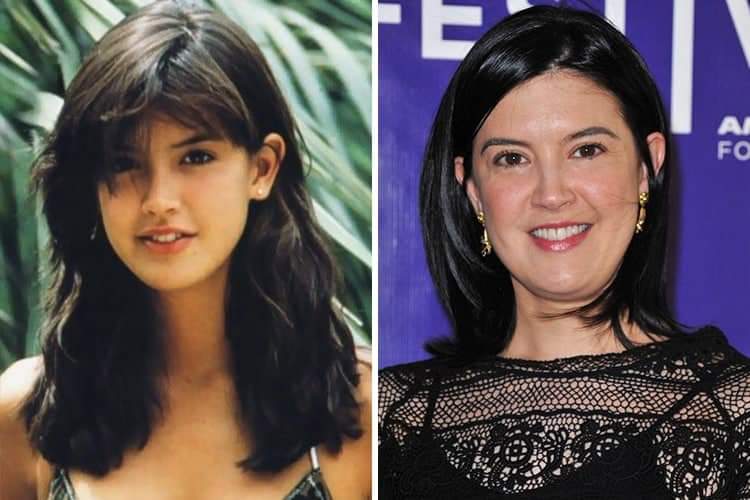
Rather than being defined by that image alone, Cates worked to expand her range, choosing roles that mixed comedy, romance, and drama.
The Films That Defined Her Career
Throughout the 1980s, Cates starred in several enduring classics, including:
- Fast Times at Ridgemont High (1982)
- Gremlins (1984) and Gremlins 2 (1990)
- Bright Lights, Big City (1988)
- Drop Dead Fred (1991)
Her performances combined warmth, wit, and a grounded presence that set her apart from many of her contemporaries.
Marriage and a Turning Point
In 1989, Phoebe Cates married actor Kevin Kline. The couple went on to have two children and became known for maintaining an unusually private family life by Hollywood standards.
After the early 1990s, Cates gradually stepped away from acting. Her decision wasn’t driven by controversy or career decline—but by a desire to focus on family.
Unlike many stars who announce retirement with fanfare, Cates simply stopped taking roles.
Life Out of the Spotlight
Cates later became a successful entrepreneur, opening a boutique called Blue Tree on Manhattan’s Upper East Side. Friends and neighbors have often remarked on how normal and grounded her post-Hollywood life has been.
She has made very few public appearances since leaving acting, choosing privacy over nostalgia-driven comebacks.
A Different Kind of Hollywood Story
Phoebe Cates’s legacy is unusual precisely because it isn’t built on constant reinvention or longevity on screen. Instead, it rests on:
- A short but influential film career
- Roles that defined an era
- The confidence to walk away when she chose
In an industry that rarely allows women to control the arc of their own fame, Cates did exactly that.
The Lasting Impact
Decades later, Phoebe Cates remains a cultural touchstone—not because she stayed, but because she left on her own terms. Her films continue to be rediscovered by new generations, and her choice to prioritize personal life over perpetual fame has only strengthened her reputation.
In Hollywood, where visibility is often equated with success, Phoebe Cates proved that knowing when to step away can be just as powerful as knowing how to shine.