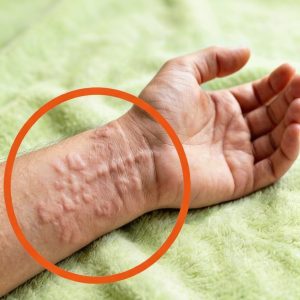
Seeing a sudden cluster of raised, fluid-filled bumps on the skin — especially on one side of the body — can be alarming. Many people immediately worry about serious conditions.
However, bumps that look like the ones in the image — grouped, blister-like lesions on a reddened base — are most commonly associated with shingles (also known as herpes zoster).
Here’s what you should know.
What Is Shingles?
Shingles is caused by the varicella-zoster virus, the same virus that causes chickenpox.
After someone has chickenpox, the virus does not leave the body. Instead, it remains dormant in nerve tissue and can reactivate years later — often in adulthood or later life.
When it reactivates, it causes a painful rash known as shingles.
What Do Shingles Bumps Look Like?
Shingles typically appears as:
- Clusters of fluid-filled blisters
- Red, inflamed skin underneath
- A rash that follows a stripe or band on one side of the body
- Often located on the torso, neck, or face
Before the rash appears, people may experience:
- Tingling
- Burning
- Sharp nerve pain
- Sensitivity to touch
The rash usually develops on only one side of the body because it follows a specific nerve path.
Is It Contagious?
Shingles itself is not spread from person to person.
However, the virus inside the blisters can spread to someone who has never had chickenpox or the chickenpox vaccine. In that case, the person would develop chickenpox, not shingles.
Until the blisters crust over, it’s best to:
- Keep the rash covered
- Avoid touching or scratching
- Avoid contact with pregnant women, newborns, or immunocompromised individuals
Who Is at Higher Risk?
Shingles is more common in:
- Adults over 50
- People with weakened immune systems
- Individuals experiencing high stress
- Those recovering from illness
The risk increases with age because the immune system naturally weakens over time.
Why Early Treatment Matters
If shingles is suspected, it’s important to see a doctor quickly.
Antiviral medications work best when started within the first 72 hours of symptoms. Early treatment can:
- Shorten the duration
- Reduce pain severity
- Lower the risk of complications
One serious complication is postherpetic neuralgia, where nerve pain continues even after the rash heals.
Could It Be Something Else?
Not every bump is shingles. Similar-looking lesions can also be caused by:
- Skin infections
- Allergic reactions
- Contact dermatitis
- Other viral conditions
A healthcare professional can confirm the diagnosis.
The Bottom Line
If you notice a painful cluster of blister-like bumps appearing suddenly — especially on one side of your body — don’t ignore it.
It may be shingles, a condition that is treatable but requires prompt attention.
Early medical care can make a significant difference in recovery and comfort. If you’re unsure, consult a healthcare provider for proper evaluation and guidance.