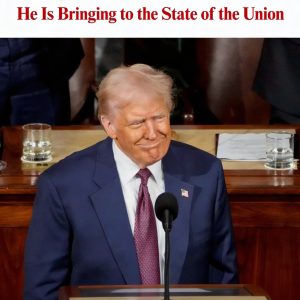
In a significant diplomatic moment, Pope Leo XIV and the Vatican have formally declined an invitation from Donald Trump to join a new international initiative called the “Board of Peace.”
The decision highlights a growing divide in how world leaders believe major conflicts and crises should be managed — and puts the Vatican squarely on the side of the United Nations as the primary global forum for peace and security.
What Is the “Board of Peace”?
The Board of Peace is a new international body launched in January 2026 under the leadership of Donald Trump, initially intended to oversee reconstruction and stability efforts in the Gaza Strip after the recent Israel-Hamas war.
Trump has presented the board as a platform that could later expand to address other global conflicts and crises, effectively positioning it as an alternative peace-making forum alongside — or in some views outside — traditional U.N. structures.
Several nations — including Israel, Argentina, Russia, Saudi Arabia, Egypt, and Turkey — have signed on to the initiative so far. But key European and U.S. allies — such as France, Germany, Italy, and the United Kingdom — have so far declined to join.
Vatican Says No — Here’s Why
The Vatican was formally invited in January to take part in the Board of Peace. But on Tuesday, February 17, 2026, Cardinal Pietro Parolin, the Holy See’s Secretary of State, announced that the Vatican will not participate.
According to the Vatican:
- The board’s nature is not that of a traditional nation-state body, making it unsuitable for the Holy See to join.
- The Vatican insists that the United Nations should be the primary body to manage international crisis situations like post-war reconstruction and conflict resolution.
“This is one of the points on which we have insisted,” Cardinal Parolin said, underscoring the Vatican’s emphasis on international legitimacy and established multilateral frameworks.
A Broader Diplomatic Context
Pope Leo has been outspoken on global issues and foreign policy. Beyond this board decision, his public comments and actions — including criticism of hardline immigration policies and calls for humanitarian responses in conflict zones — illustrate a broader commitment to multilateral diplomacy and international law.
The Vatican also holds permanent observer status at the U.N., maintaining decades-long engagement in global diplomacy through that forum.
Reaction to the Vatican’s Decision
News of the Vatican’s refusal drew sharp responses from some corners. White House Press Secretary Karoline Leavitt called the decision “deeply unfortunate,” stressing that the Board of Peace is meant to be a non-partisan effort focused on humanitarian recovery and future stability.
Critics of the board have pointed to concerns such as:
- Its expansion beyond Gaza reconstruction into broader peace efforts, which some see as duplicating or undermining U.N. authority.
- The absence of Palestinian representation on the board.
- Questions about whether some participating nations respect international human rights norms.
What This Means Going Forward
The Vatican’s rejection is more than symbolic.
It highlights ongoing global debates about:
- Who should lead international crisis response
- How peace and reconstruction efforts are structured
- The role of long-standing institutions like the U.N. versus newer initiatives
As the Board of Peace prepares to hold its first meeting in Washington, the Vatican’s stance underscores a preference for collective, institutionalized diplomacy over informal cross-national bodies with leadership dominated by a single country.
Whether other nations follow the Vatican’s lead in expressing reservations — or whether the board solidifies its role — remains a key question in global affairs this year.