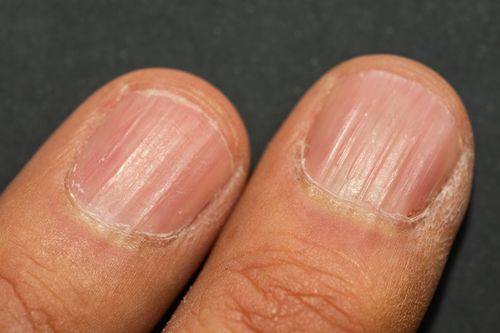
If you’ve noticed fine vertical ridges running from the cuticle to the tip of your nails, you’re not alone. These lines—often more noticeable after age 40—are common, usually harmless, and often part of the body’s natural aging process. Still, they can sometimes hint at underlying factors worth paying attention to.
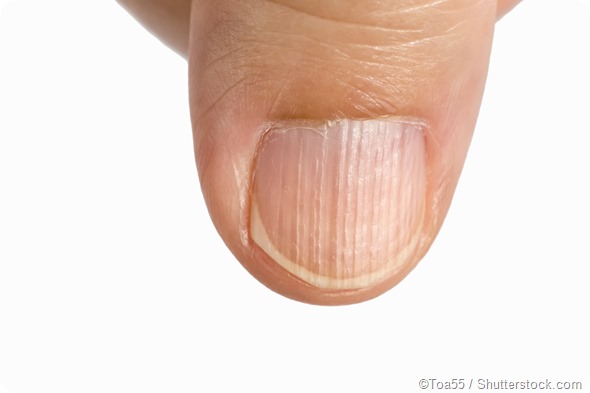
The most common reason: natural aging
As we get older, nail growth slows and becomes less uniform. The nail matrix (where new nail cells are made) produces cells at slightly different rates, creating longitudinal ridges. Think of it like faint lines in wood grain—normal and expected over time.
Dryness and dehydration
Skin and nails lose moisture with age. Dry nails can make ridges stand out more. Cold weather, frequent handwashing, and harsh soaps amplify the effect.
What helps:
- Daily cuticle oil or hand cream (look for glycerin or urea)
- Wearing gloves for chores
- Gentle nail care (avoid aggressive buffing)
Nutrient gaps (sometimes)
While vertical ridges alone rarely mean deficiency, low iron, zinc, biotin, or B vitamins can contribute—especially if ridges are paired with brittleness, splitting, or fatigue.
What helps:
- A balanced diet with lean proteins, leafy greens, whole grains
- Talk to a clinician before supplements
Health conditions to rule out
Occasionally, ridges can be more noticeable alongside conditions like thyroid disorders, circulatory issues, or anemia—but they’re rarely the only sign.
Get checked if you notice:
- Sudden, deep ridges across many nails
- Color changes (yellowing, dark streaks)
- Pain, nail lifting, or significant thinning
When to worry—and when not to
- Usually normal: Mild, even ridges that develop gradually
- Worth a visit: Rapid changes, discoloration, or other symptoms
Bottom line
Vertical nail lines after 40 are most often a normal sign of aging or dryness. Good hydration, gentle care, and nutrition go a long way. If anything changes quickly or comes with other symptoms, a healthcare professional can help rule out underlying causes.
This article is for general information only and isn’t a medical diagnosis.